OVERVIEW
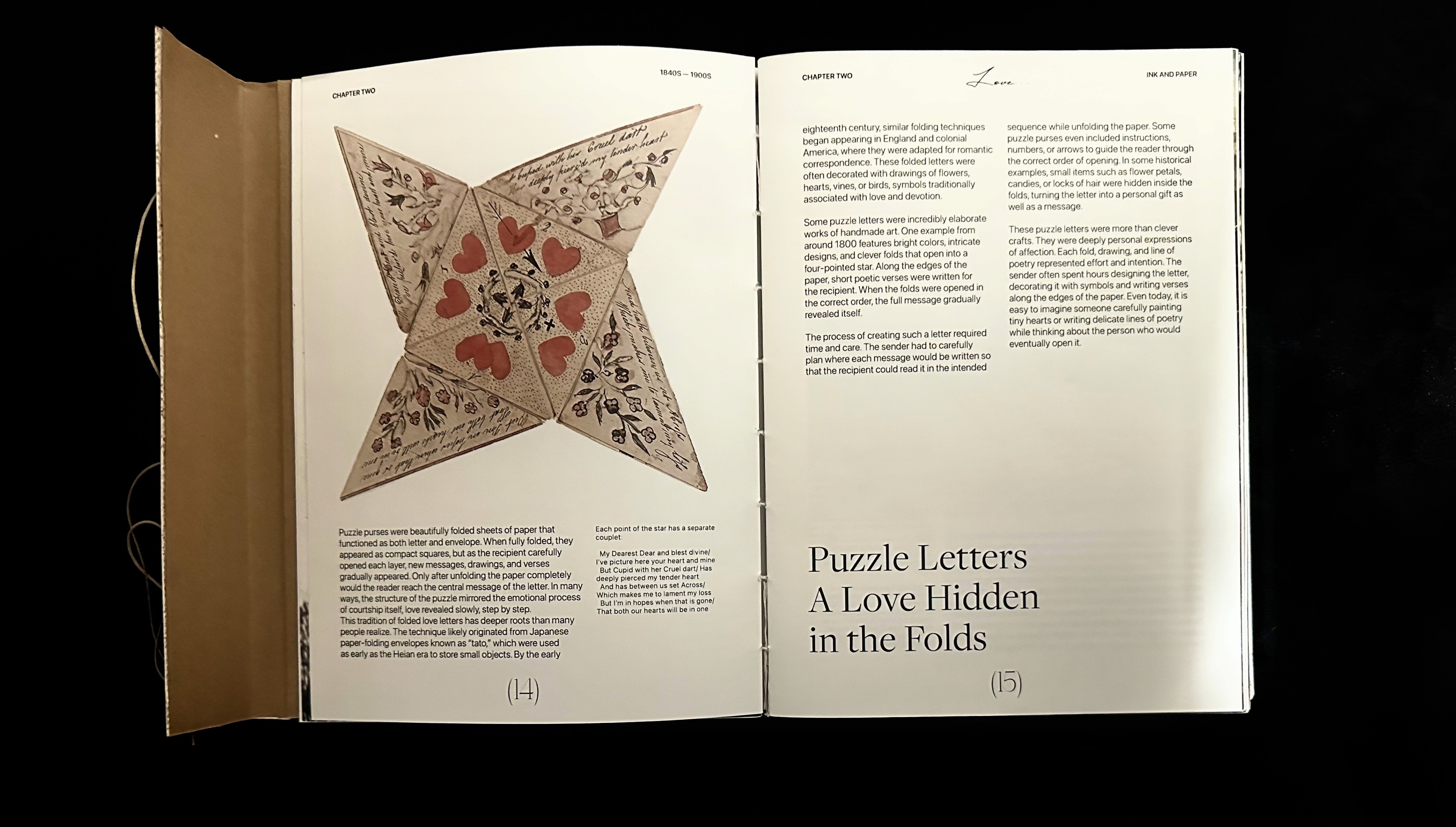
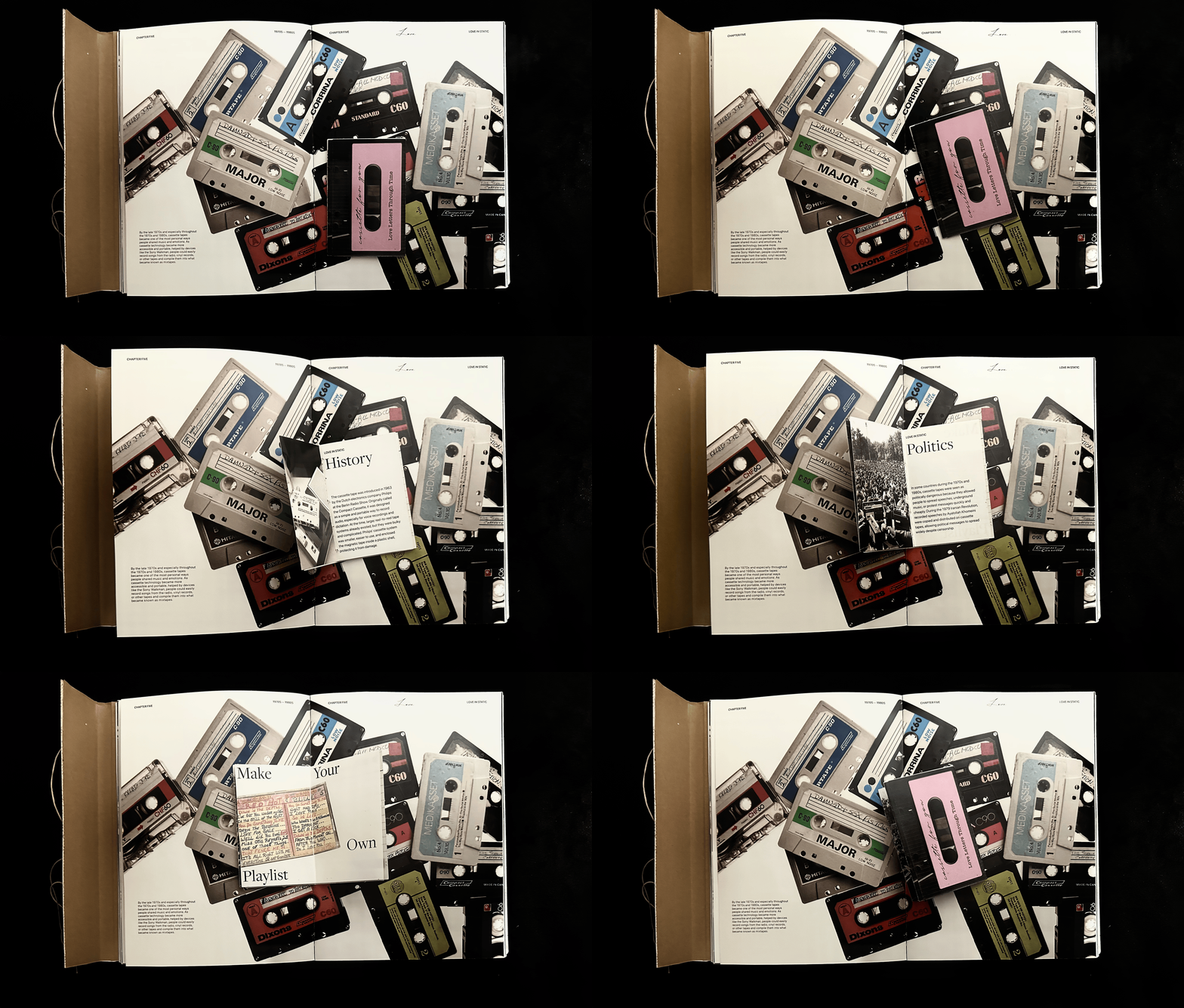
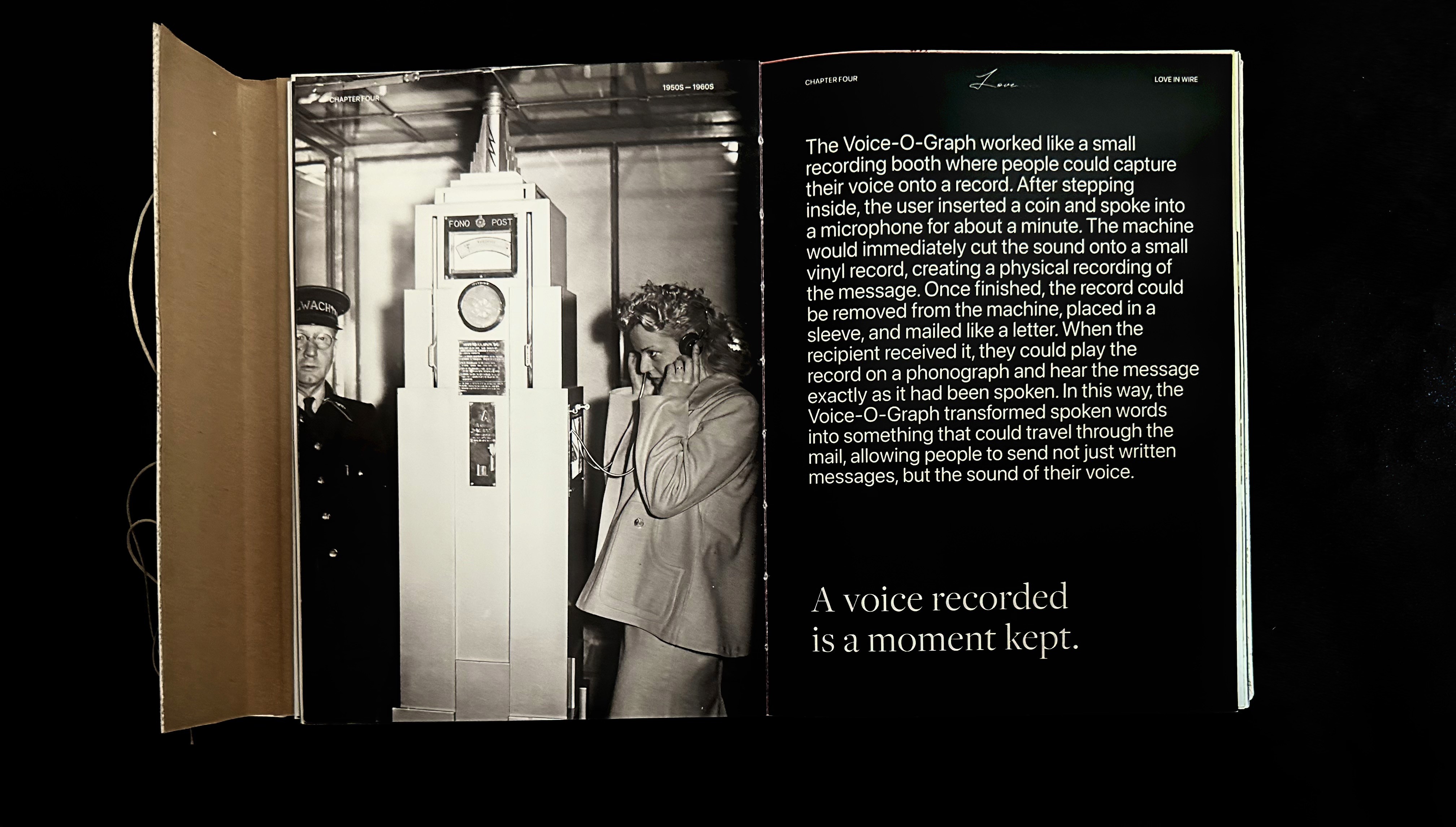
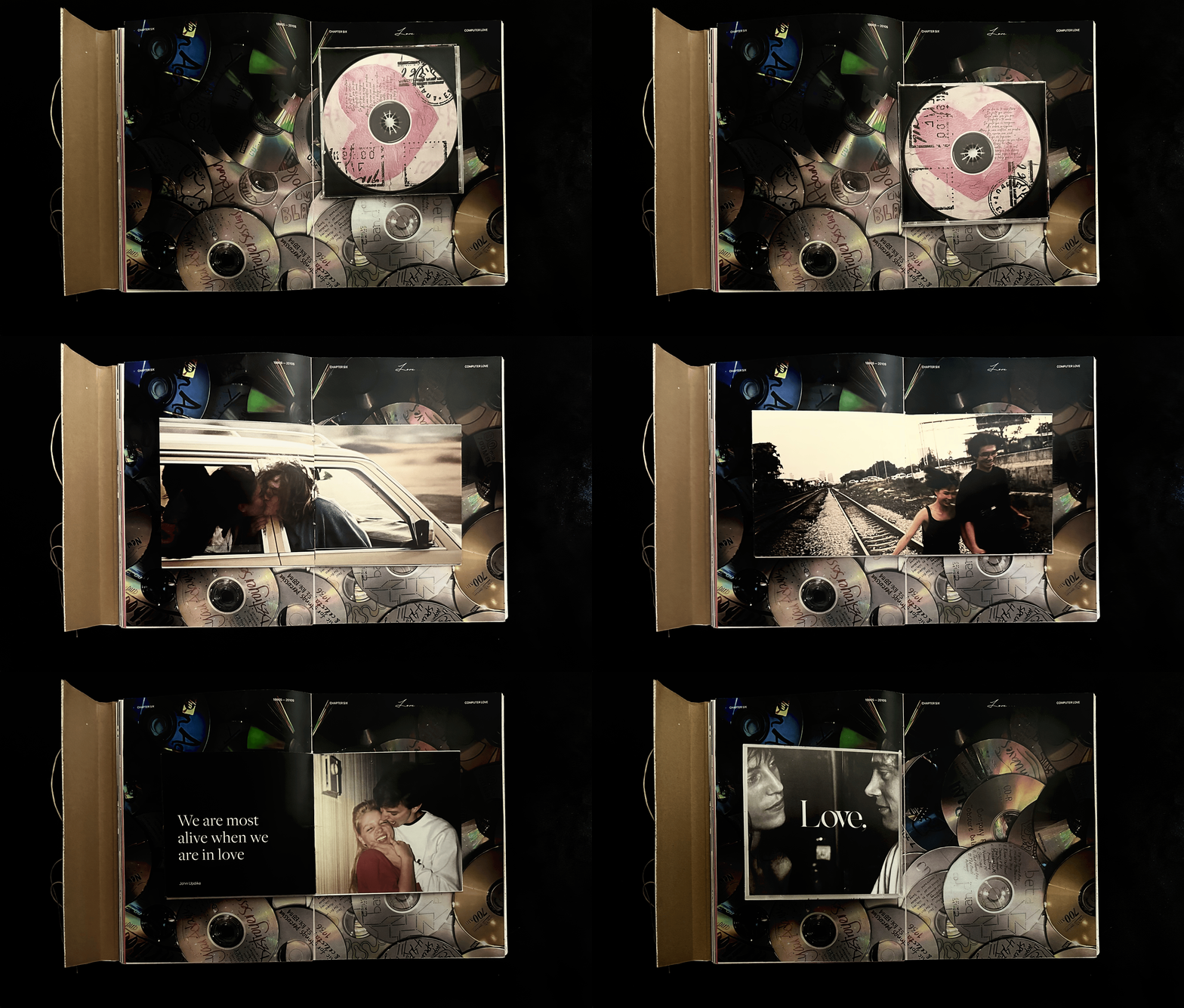
This book bridges past and present, revealing both change and continuity in how we express care. This publication is not only a collection of stories, but an interactive and reflective space, inviting readers to see themselves within a larger history of love and to consider their own ways of expressing it.
SKILLS
Editorial Design
Book Binding
Storytelling
PROBLEM
In today’s world, expressions of love have become fast, disposable, and often surface-level. Messages are sent instantly, but just as easily ignored, deleted, or forgotten. There is a loss of intention and permanence in how we communicate affection.
RESEARCH
The inspiration for Love, Written Through Time began with my father. After leaving the Philippines, we exchanged handwritten letters, finding ways to stay connected despite the distance. This personal experience sparked my curiosity about how people have expressed and preserved love across generations. I explored historical archives, wartime correspondence, vintage advertisements, and the evolution of communication, drawing from sources such as the Smithsonian National Postal Museum, National WWII Museum, and Duke University Libraries. Through this research, I examined how expressions of love have evolved from handwritten letters to digital messages, informing the book's editorial storytelling, typography, and hand-bound design to celebrate the enduring intimacy of written communication.

SOLUTIONS
I created Love Through Time because love letters hold a special place in my heart. When I left the Philippines, my dad and I wrote letters to stay connected, and they became an important way for us to communicate across the distance. That experience made me appreciate how letters can preserve love, memories, and emotions in a deeply personal way.




KEY TAKEAWAYS
The way we express love may change with time, but the desire to feel remembered remains.
A Living Archive of Love
I envision expanding the publication into a participatory archive, inviting readers to contribute their own letters across generations. Fold-out envelopes, handwritten inserts, and removable stationery could transform the book from a collection of historical stories into a place for new ones to begin.
Making the Intangible Tangible
Hand-binding this book reinforced why physical design matters. Unlike fleeting digital messages, the texture of paper, the act of turning a page, and the permanence of print create an experience readers can physically hold onto.